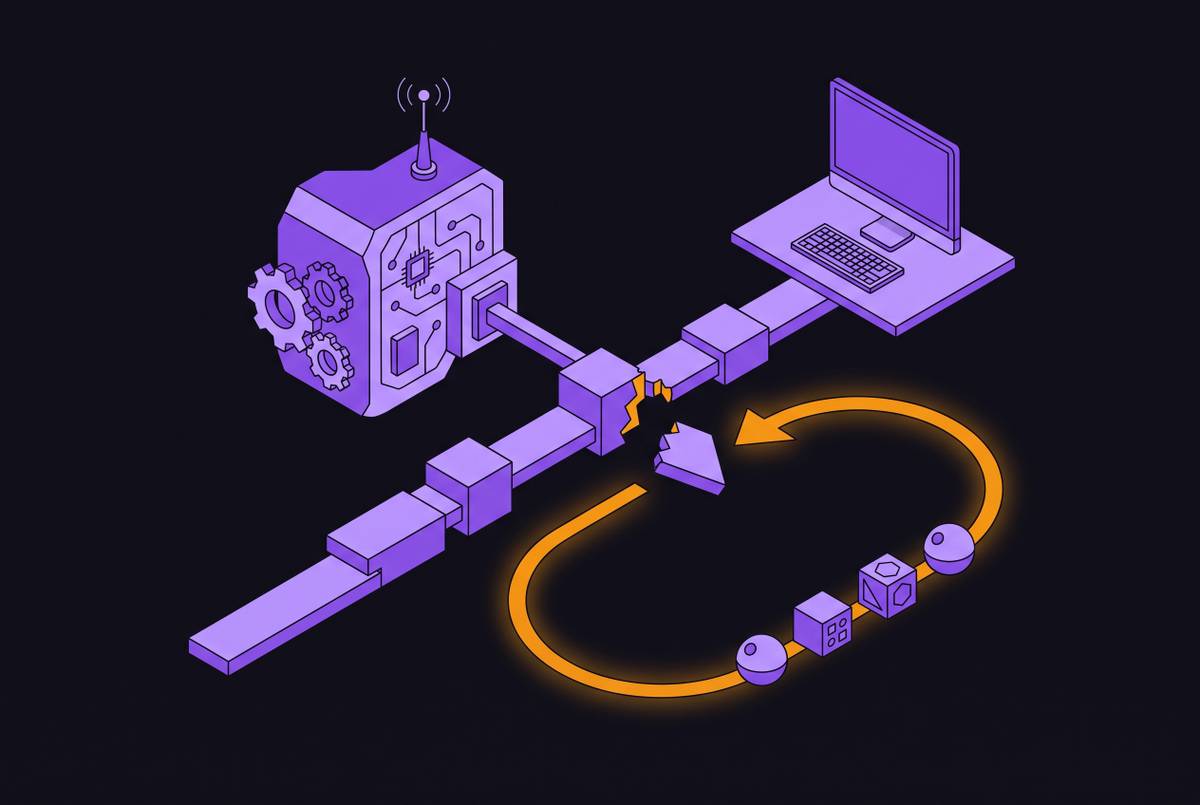
Persistent Browser Sessions in AI Agents
AI agents need browser sessions that survive between runs to work with real business software.
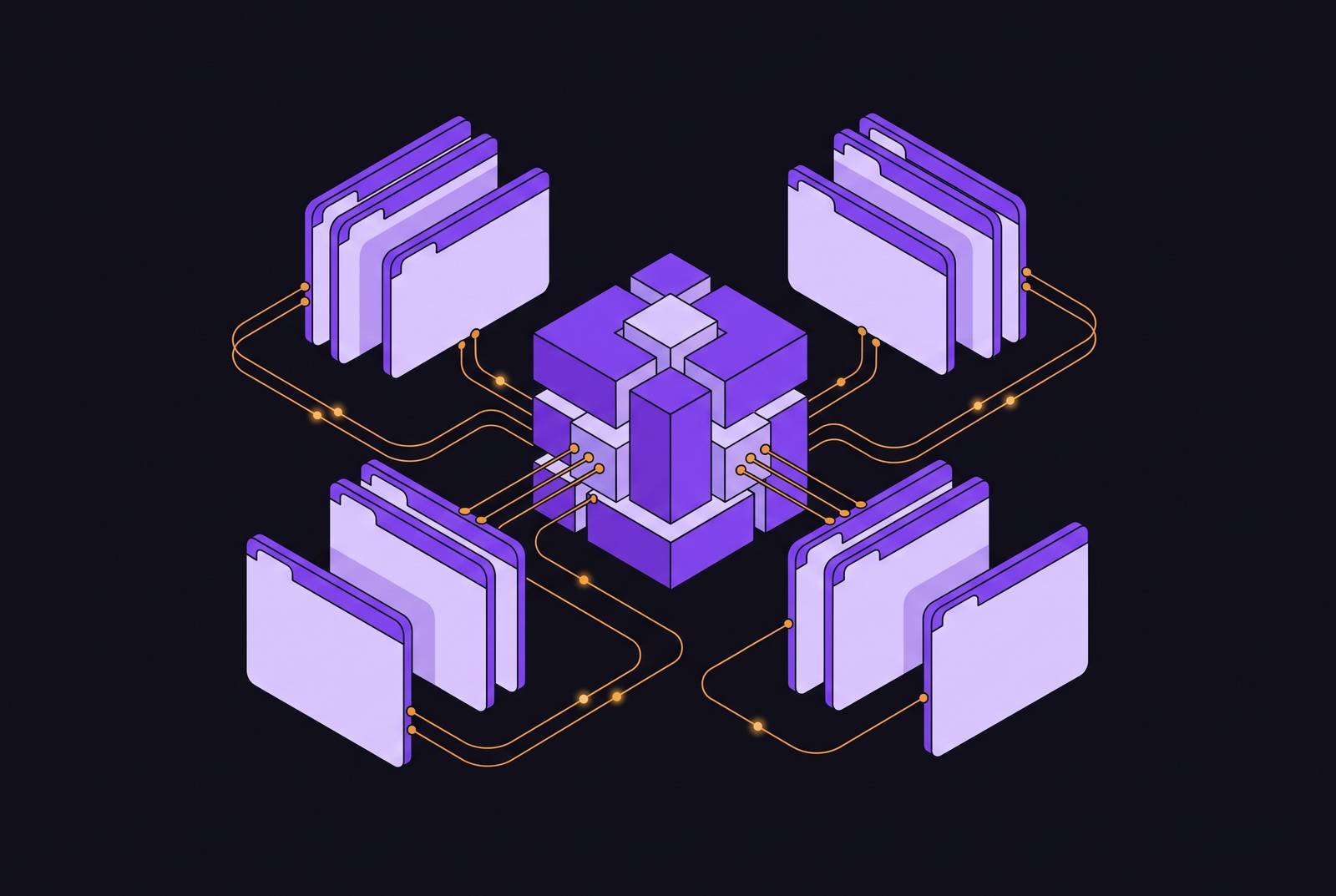
An agent that logs into a customer dashboard, works inside it for three hours, and comes back the next day to finish the job needs the browser to remember who it is. That single requirement, that a login survive the gap between one run and the next, is what a persistent browser session actually provides, and almost nothing about production AI agents works without it.
Why browser sessions fit how agents interact with software
Most business systems an agent needs to touch, customer portals, internal dashboards, SaaS products, government sites, do not expose usable APIs. The browser isn't a fallback option chosen for convenience. For a huge share of real business software, it's the only interface that exists.
That fact alone would be enough to make browser automation important, but it understates the actual engineering problem. A script that drives a browser runs once, does its job, and exits; if it fails, someone reruns it from the top. An agent can't work that way. It has to pick up a workflow partway through, recover when a step fails without restarting everything that came before, and carry context forward across dozens of tool calls and reasoning steps. None of that is possible unless the state from one run is still there when the next run starts.
The Mastra roundup of leading browser platforms states the design challenge directly: production agents need sessions that scale across many concurrent users, recover from failures without losing the thread, keep authentication intact, and feed into an LLM's reasoning loop, not just fire off a sequence of clicks. That's a materially different bar than "can it click a button." It's a bar about whether the system remembers what it was doing.
Part of the confusion in this space comes from lumping together three things that are not the same thing. AI browser agents that interpret a goal and decide what to click, managed infrastructure that supplies the actual browser fleet underneath those agents, and deterministic automation frameworks that execute a fixed script, all get discussed as though they're interchangeable. They solve different problems, and picking the wrong one for a given job is the most common reason production browser automation breaks. The rest of this piece is about the layer underneath all three: the session state that has to survive, and the infrastructure that holds it up, because without that layer none of the three can function reliably.
What session state must survive across runs
Calling a browser session "persistent" because it remembers a password undersells what's actually being preserved. A session carries several distinct kinds of state, each with its own storage mechanism and its own way of quietly breaking.
Cookies and authentication tokens are the obvious piece, and also the most fragile. Session cookies expire on their own schedule, and any platform that fails to restore them properly on resume sends the agent straight back to a login screen, with no warning until the task itself fails.
localStorage and sessionStorage are key-value stores that a large share of modern SaaS products use to hold UI preferences, cached responses, and workflow checkpoints. Lose these and an application's internal state can break in ways that stay invisible right up until a task fails partway through.
IndexedDB holds the heavier structured data: offline caches, draft content, queued actions waiting to be sent. Losing it is especially damaging for an agent working inside a productivity tool, where a draft or a queued action represents real, unsaved work.
Service workers control how a page fetches data and caches it. If a resumed session is missing the service worker the original session had, the site can behave differently the second time around, even though nothing about the task changed.
Form data and saved browser preferences matter less for any single run, but they matter for reproducing a multi-step form workflow the same way twice.
WebSocket connections are the one category that doesn't fit this pattern. A live socket genuinely cannot be paused and picked back up; it has to be torn down and rebuilt from scratch on resume, and the agent itself, not the underlying platform, has to be written to handle that reconnection gracefully.
The Firecrawl roundup of browser agent platforms notes that Browserbase Contexts preserve cookies, localStorage, IndexedDB, session storage, service workers, form data, and browser preferences across sessions, and that a Context stays available until someone deletes it. That's a meaningful answer to the storage half of the problem. An agent can log into a system once and keep working across many separate runs without logging in again. Preserving the session no longer guarantees anything; what matters now is whether the agent reasons correctly once it's back inside that session.
How the live-session versus headless-remote distinction shapes preservable state
Two architectures dominate how customer-facing agents get built, and they solve different problems well enough that treating them as interchangeable produces sessions that look durable right up until they silently drop state at the worst possible moment.
A headless browser running on remote infrastructure starts a clean, isolated instance of Chromium on a server, runs the task, and tears the instance down. That isolation between runs matters more than continuity makes this a strong fit for scraping, testing, and batch automation. A remote instance doesn't automatically share the user's authenticated state. Acting on a user's behalf means copying cookies into that remote environment by hand, which opens both a technical seam and, in any regulated setting, a real governance question about who's holding a user's credentials and where. On top of that, the agent's actions are invisible to the person waiting on them unless screenshots or video get streamed back, and streaming adds its own latency.
A live browser session runs inside the user's own active browser and shares its authenticated state directly, with no cookie transfer step. Webfuse's 2026 analysis lays out why that matters for anything conversational: a voice-driven interaction has a total pipeline budget of roughly 1,200 milliseconds before a browser action even gets considered, and a remote headless instance adds round-trip network time plus pixel-streaming overhead on top of that budget, which is enough to break the sense of a live conversation. The cost of that responsiveness is that live sessions are harder to isolate from each other, harder to snapshot, and harder to scale across a large number of concurrent users.
Both architectures run into the same wall once the agent tries to actually act. Knowing the right action to take doesn't guarantee the click lands. The target might sit inside a React Suspense boundary that hasn't finished hydrating, an Angular component still mid-update, a Salesforce Lightning element hidden behind Shadow DOM, or a cookie banner sitting on top of the real click target.
For most agent-powered products, headless managed infrastructure is the sounder choice: it offers real isolation between tasks, scales to many users, and supports the snapshot capability later sections depend on. Choosing it means accepting responsibility for session state transfer as a first-class engineering problem, and picking infrastructure that handles cookie and storage transfer correctly rather than treating it as an afterthought.
What managed browser infrastructure platforms provide for session persistence
The platforms developers reach for differ less in whether they can drive a browser and more in how seriously they treat the problem of keeping a session's state intact across runs.
Browserbase is a cloud platform built for production browser automation that works alongside Playwright, Puppeteer, and Selenium, so developers write automation code they already know while it manages the browser fleet underneath it. Its persistent Contexts preserve the full state surface, cookies, localStorage, IndexedDB, session storage, service workers, form data, and preferences, until someone explicitly deletes them, with individual sessions running up to six hours and reusable profiles carrying state forward into later workflows. It also ships session observability through a live video stream, logs, and replays, along with proxy rotation, stealth mode, and a first-party MCP integration built alongside Stagehand. A September 2026 roundup from Context.dev names Browserbase and Stagehand together as the strongest pick for production cloud-browser infrastructure specifically where an application needs persistent authenticated sessions. Pricing runs usage-based, and the point where a self-hosted setup becomes cheaper than the managed service tends to arrive once a team is running a moderate volume of sessions each month.
Steel is open-source browser infrastructure, licensed Apache-2.0, built around a simple developer API for running scalable cloud browser sessions, with a self-hosted Docker path available for teams that want it. Its cloud pricing, as of August 2026, runs a free Launch tier plus usage with sessions capped at a short maximum duration, a paid Scale tier plus usage with sessions up to an hour, and custom Enterprise pricing above that. It's the natural landing spot for teams whose session volume has already crossed the point where a managed service stops making financial sense.
Browserless provides managed cloud infrastructure for headless browser APIs, built around raw throughput and high-concurrency execution for scraping and background automation work. It exposes GraphQL endpoints that return structured JSON, supports custom Docker images, and targets teams already writing Playwright or Puppeteer who want someone else managing the fleet without touching their existing code. It fits best where sessions are stateless or short-lived, since isolating each task cleanly matters more there than carrying state across them.
An open-source framework with more than 97,000 GitHub stars, it takes a natural-language task and decides the browser actions to carry it out, offering both the agent reasoning layer and the underlying browser infrastructure. It holds up best on open-ended tasks across interfaces the agent hasn't seen before: where a Playwright script breaks the moment a button's class name changes, a Browser Use agent can recognize that the element is still a submit button and keep going. It scored at the top of the WebVoyager benchmark among open-source frameworks, earning the Firecrawl roundup's description as state-of-the-art for that category.
Stagehand is a TypeScript SDK, with tens of thousands of GitHub stars, that combines deterministic Playwright automation with agent-oriented actions. It sits inside the Browserbase ecosystem and is the recommended SDK for TypeScript developers who want structured, predictable browser control with an LLM-augmented fallback when the deterministic path doesn't match the page.
Skyvern is an open-source-plus-cloud platform with tens of thousands of GitHub stars, designed for no-code workflow automation; it leads on form-filling tasks, scored highly on WebVoyager, and prices usage-based with a free tier.
Snapshot-restore and pause-resume infrastructure for durable session state
Preserving cookies across sessions leaves the compute environment's persistence unsolved. The compute environment running that browser, the actual machine or virtual machine holding the process, has to survive sleep, crashes, and scale-down events without losing what's in memory and on disk, or the browser platform's careful cookie management is undone the moment the host underneath it restarts.
Two patterns handle this, and they serve different needs. In-place pause and resume snapshots a running environment, filesystem and memory both, pauses it indefinitely, and resumes it exactly where it left off when new work shows up, with billing stopping for the duration of the pause. That's the right model for an agent that mostly sits idle between a given user's interactions, sleeping in the gaps and waking with its full context intact in under a second.
Snapshot and fork instead captures state as a reusable artifact that can seed brand-new sandboxes, letting one snapshot branch into many parallel environments that all start from the identical point. Morph's Infinibranch snapshots an entire running VM and can branch or restore it in under 250 milliseconds, which is the right primitive whenever an agent needs to fork one environment into many copies that all continue from the same exact state. Because a single snapshot can seed many sandboxes at once, this pattern suits SWE-bench-style evaluation harnesses, where context builds up over dozens of tool calls and has to be checkpointed along the way.
Firecracker's snapshot-restore mechanism is what makes sub-second resume realistic in the first place: it pauses a sandbox, holds onto both memory and filesystem state, and resumes in 5 to 30 milliseconds, fast enough that an agent waking up to handle a user's request feels instant rather than delayed. AgentENV, open-sourced alongside Kimi K3's open weights release on July 27, 2026, is a distributed, self-hosted sandbox runtime that runs each agent environment as a Firecracker microVM behind a standard HTTP API; it claims snapshot-backed environments boot or resume in under 50 milliseconds and pause in under 100, with a paused sandbox releasing its CPU and memory back to the host.
The argument now turns from what the browser platform does to what the layer underneath it has to do. A browser context stored by a managed platform like Browserbase keeps the cookie and storage layer intact, but if the compute environment running the actual browser process isn't also snapshotted, whatever was in flight at the moment of restart is gone. Session persistence at the browser layer and snapshot-restore at the compute layer are two separate guarantees, and a production agent needs both holding at once, not one standing in for the other.
Micro-VM isolation as the right compute primitive for browser-holding agents
A browser process that can install packages, open arbitrary network connections, and run whatever JavaScript a page throws at it is a real attack surface, and holding that process in something with only a process boundary around it, rather than genuine isolation, is not a safe trade to make at production scale.
Firecracker is the isolation primitive most agent sandbox providers reach for because it builds lightweight virtual machines, each with its own dedicated Linux kernel, running inside KVM, so that every workload sits fully separated from the host at the hypervisor boundary. It boots in about 125 milliseconds with under 5 MiB of overhead per VM, fast enough to schedule agents on demand without keeping a pool of pre-warmed instances sitting idle. It supports only five device types, compared with hundreds in QEMU, which narrows the attack surface sharply: compromising a workload this way means escaping both the guest kernel and the hypervisor, not just one or the other. Several sandbox providers build on Firecracker microVMs as their backend, while others use gVisor containers for isolation.
SmolVM, published April 21, 2026 under Apache-2.0 by Aniket Maurya and the Celesto AI team, wraps Firecracker on Linux, QEMU on macOS, and libkrun behind a Python API with a three-line developer interface. That a layer this security-critical can be abstracted into three lines of Python without giving up its isolation guarantees says something about how mature Firecracker has become as infrastructure, not just as a research project.
This pattern also occurs outside Firecracker specifically. Sprites offers a persistent, reversible environment with a filesystem that survives independently, restorable checkpoints, and a network egress policy that's open by default and can be narrowed by applying a policy from outside the Sprite. It's a concrete instance of VM-level isolation applied directly to agent code execution, and it points at the same underlying requirement running through every section here: a browser-holding agent needs its compute environment to behave like a durable, isolated machine, not a disposable container that happens to still be running.