Remote Computer-Use Agent Runtime Environments
VMs and snapshots enable safe, persistent agent workspaces without runaway compute costs.
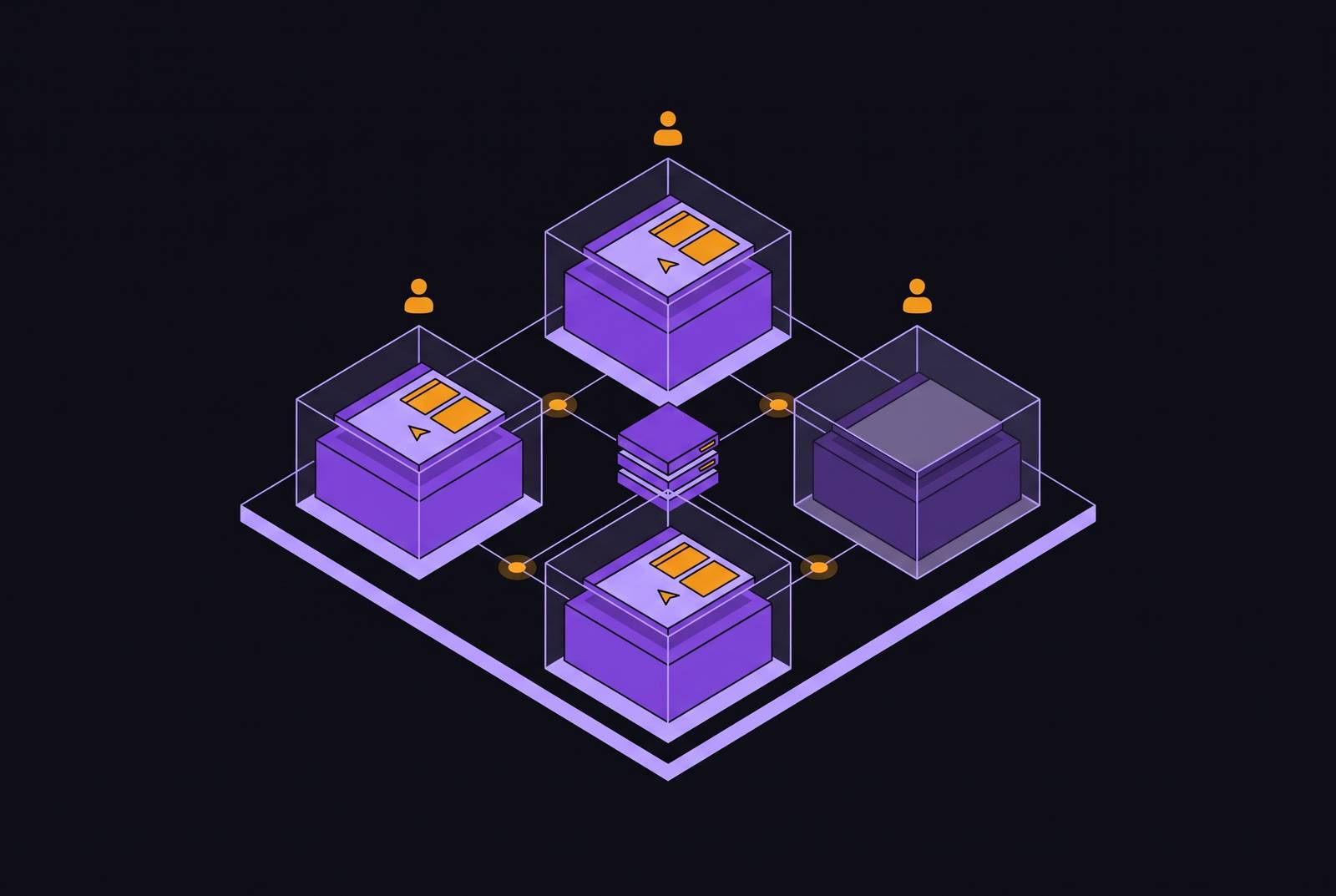
Remote computer-use agent runtime environments must keep a workspace live while limiting the damage an agent can cause inside it. Their defining requirements are isolation, persistence, low-latency wake, and safe rollback. For developers building this stack, the central architectural choice is a persistent, VM-isolated environment per agent, with snapshot-aware scheduling that treats recovery and resumption as routine operations.
What computer-use agents actually do to a runtime environment
Computer-use agents use screenshots or accessibility data to see an environment, plan an action, carry it out, and repeat. Their actions include clicks, keystrokes, shell commands, and file edits. Each step changes the context for the next. Unlike a bounded API request, this loop operates over open applications, authenticated browser sessions, local files, and running programs whose state accumulates throughout the task. Cross-application work, including navigating dashboards and operating desktop applications without APIs, therefore requires a full OS environment.
TClone's authors describe this workspace as “ambient personal state” that an agent both reads and modifies. That access creates a safety problem because a mistaken or prompt-injected action can overwrite documents, expose credentials, change system settings, or delete directories. It also creates a quality problem. A long-horizon task can benefit from trying different action trajectories, but each needs its own copy of the workspace so that their changes to the same session do not clash.
The loop also produces an uneven demand for compute. Tool calls need CPU time, but the execution environment is idle while the model reasons. Yet idle does not mean disposable, because terminal state, application caches, and in-memory program state may still be needed for the next action. The workspace is therefore not a throwaway context. It is a durable, valuable, and dangerous artifact.
Why isolation is the non-negotiable foundation
An agent that can install packages, change credentials, and change OS state needs a stronger boundary than application policy can give it. Shared-kernel containers use namespaces to keep workloads apart, but system calls still leave a path for a kernel escape. For workloads touching real credentials and filesystems, VM-level isolation is the minimum viable boundary. Each agent needs its own kernel so that the separation from other workloads is structural.
Firecracker demonstrates that this boundary can have low overhead. It uses Linux KVM and a deliberately minimal device model, with seccomp filtering, cgroups, namespaces, and a jailer process providing layered defense. Its support for memory hotplugging without downtime also addresses the unpredictable memory demands of an agent accumulating GUI state. These architectural capabilities require complementary controls elsewhere. In particular, the VM boundary does not govern network egress, so access to internal metadata services, private APIs, and arbitrary DNS requires a separate, explicit layer.
The boundary also determines what the runtime can preserve. A VM gives the runtime control of the system state needed to pause and resume a live workspace. For a multi-tenant product, provisioning an isolated VM per tenant and injecting tenant identity at runtime makes this separation part of the infrastructure.
How snapshot-restore changes the economics of persistent agent state
A full VM per agent appears expensive only if each VM must consume compute throughout its lifetime. Snapshot-restore changes that assumption by moving an idle environment into stored state and releasing its compute allocation. Idle cost becomes a storage cost instead. Because agents alternate between tool execution and model reasoning, snapshot-aware scheduling fits the workload's natural rhythm, allowing active compute cost to follow actual work.
Persistence must cover more than the working directory. Browser sessions, installed packages, credentials, terminal state, and in-memory program state all contribute to continuity. A stateless restart would require the agent to rebuild that context and potentially authenticate again. The savings depend on keeping the workspace while freeing the CPU allocation that would otherwise keep its state alive.
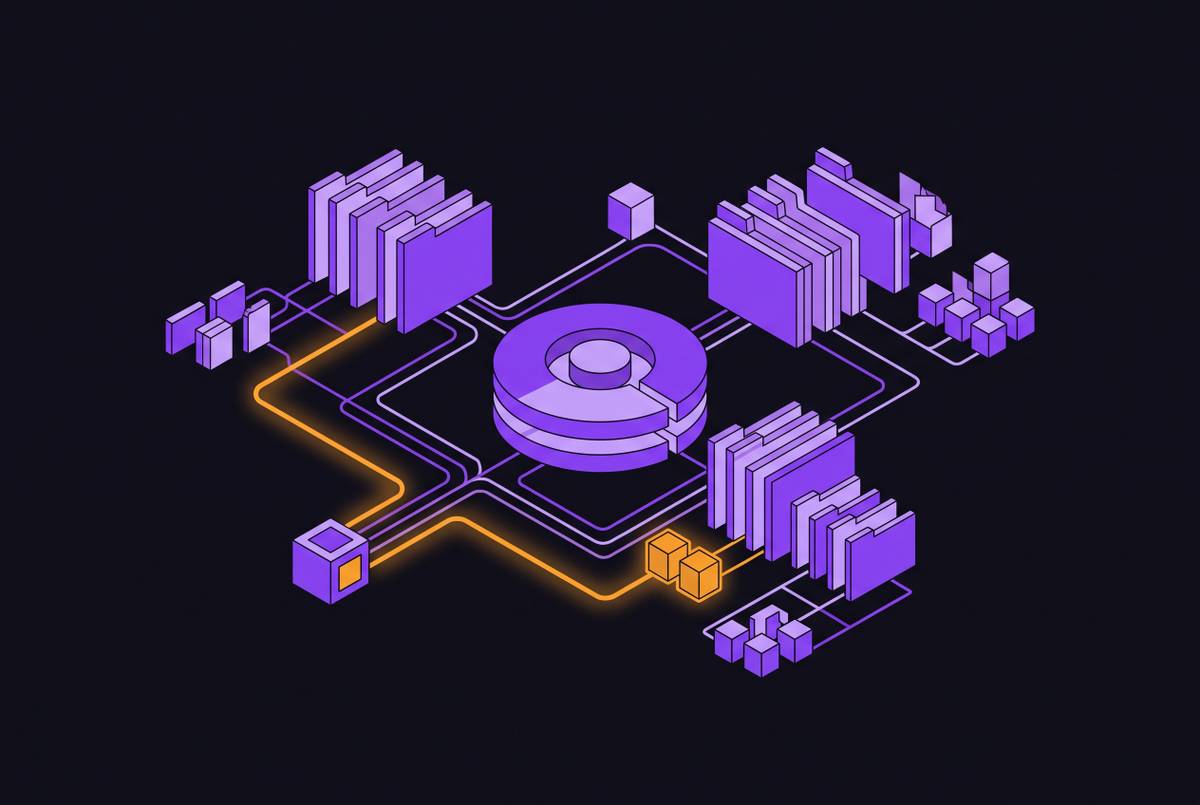
TClone shows how fast workspace operations can be separated from durable checkpointing. Its design uses sibling containers, copy-on-write memory sharing, filesystem versioning, GUI-local execution, and asynchronous checkpointing so that branch creation does not wait for a full checkpoint. This is evidence for separating the immediate execution path from durability work while retaining the tenant isolation boundary. For operators, the build-versus-rent choice still depends on how much of the fleet stays in use, with paying per active second cheaper until use is high enough to make owning a fleet pay off. Persistence and economy are compatible when the scheduler understands snapshots.
Low-latency wake and rollback as first-class requirements, not optimizations
Restore latency sits directly in the user's critical path when a new task wakes a sleeping agent. A cold start that takes several seconds can make a persistent environment feel unreliable even though it has kept its state. The product needs sub-second wake both to avoid that wait and to improve throughput.
TClone demonstrates the benefit of separating fast branching from durable checkpointing. Its end-to-end agent-loop measurement shows that it cuts total task latency by 1.9 times compared with standard KVM approaches, leaving a universal wake-time guarantee unestablished. The mechanism is nevertheless relevant because copy-on-write sharing, GUI-local execution, and asynchronous checkpointing keep expensive durability work from blocking immediate workspace operations.
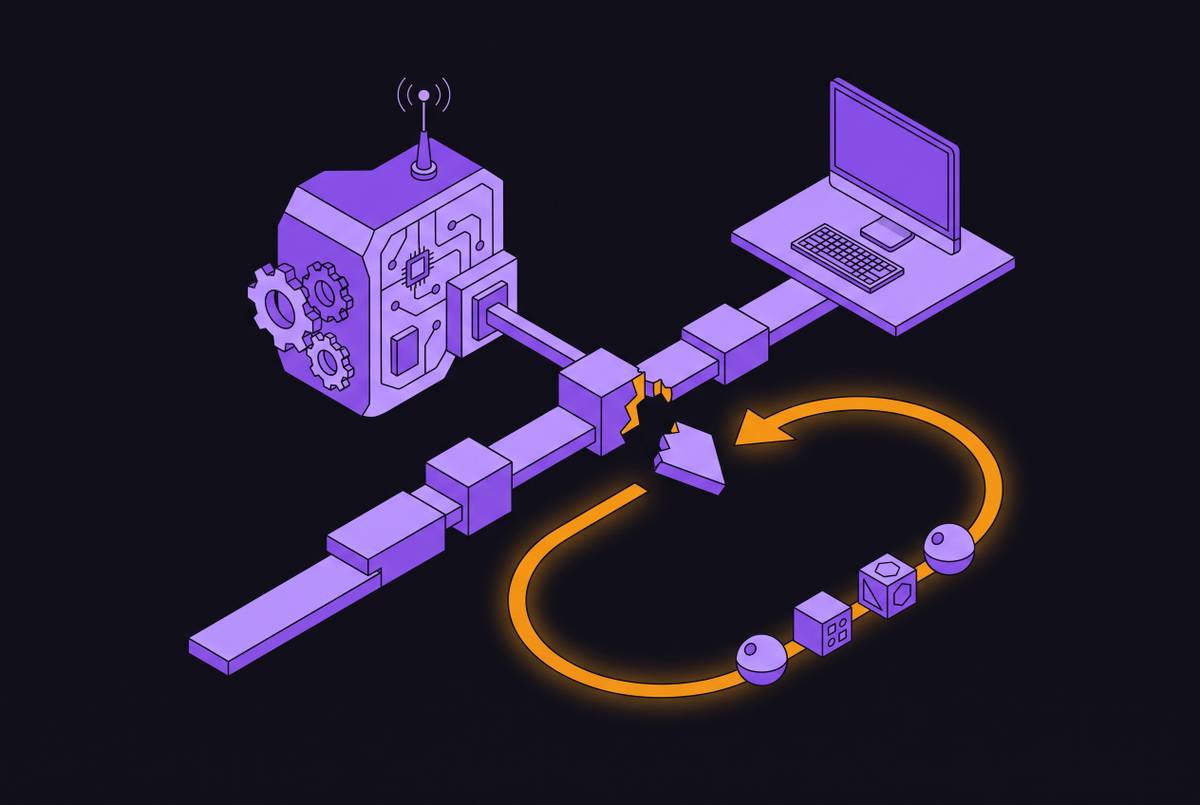
Rollback addresses a different form of correctness. A single mistaken action can affect files, application memory, GUI state, browser profiles, and local services, so undoing one file does not restore a coherent workspace. Speculative execution needs that same coherence across independent trajectories. TClone exposes snapshot, branch, independent execution, failed-branch disposal, and successful-branch promotion as runtime operations. For operators, this means planning checkpoints at defined intervals, budget-aware step limits, and access controls into the execution model. Fast wake and rollback belong in the architecture from day one.
The two sandbox placement patterns and when each applies
The Agent IN Sandbox pattern places the agent runtime and execution environment in the same VM. Users communicate with it over HTTP or WebSocket across the sandbox boundary, while the agent can access local files, installed packages, and running processes. This fits long-horizon autonomous work. An agent that installs tools, maintains a working directory, and accumulates intermediate results benefits from keeping its execution loop close to that state. The corresponding credential strategy must be explicit, with needed secrets injected at runtime through the environment.
The Sandbox as Tool pattern keeps the agent harness on the operator's server and invokes the sandbox remotely through an API. The sandbox is stateless and disposable, while credentials and context remain in the harness. This fits occasional desktop or shell work within broader tool orchestration. API keys and session tokens stay outside the execution environment, and the tool layer does the work without letting raw secrets into it. In both patterns, secrets belong neither in prompts nor in sandbox images.
The decision turns on where continuity is needed. Long-duration agents in either pattern still require checkpoints, step budgets, and per-sandbox spend caps so that one runaway task cannot consume an unchecked budget. The emerging Code-Over-API variant changes the flow of data while retaining that responsibility. It lets the agent write code that calls tools inside a sandbox and sends only result summaries back to the context window, while raw data stays inside the boundary.
Multi-tenant fleet architecture and per-user agent isolation
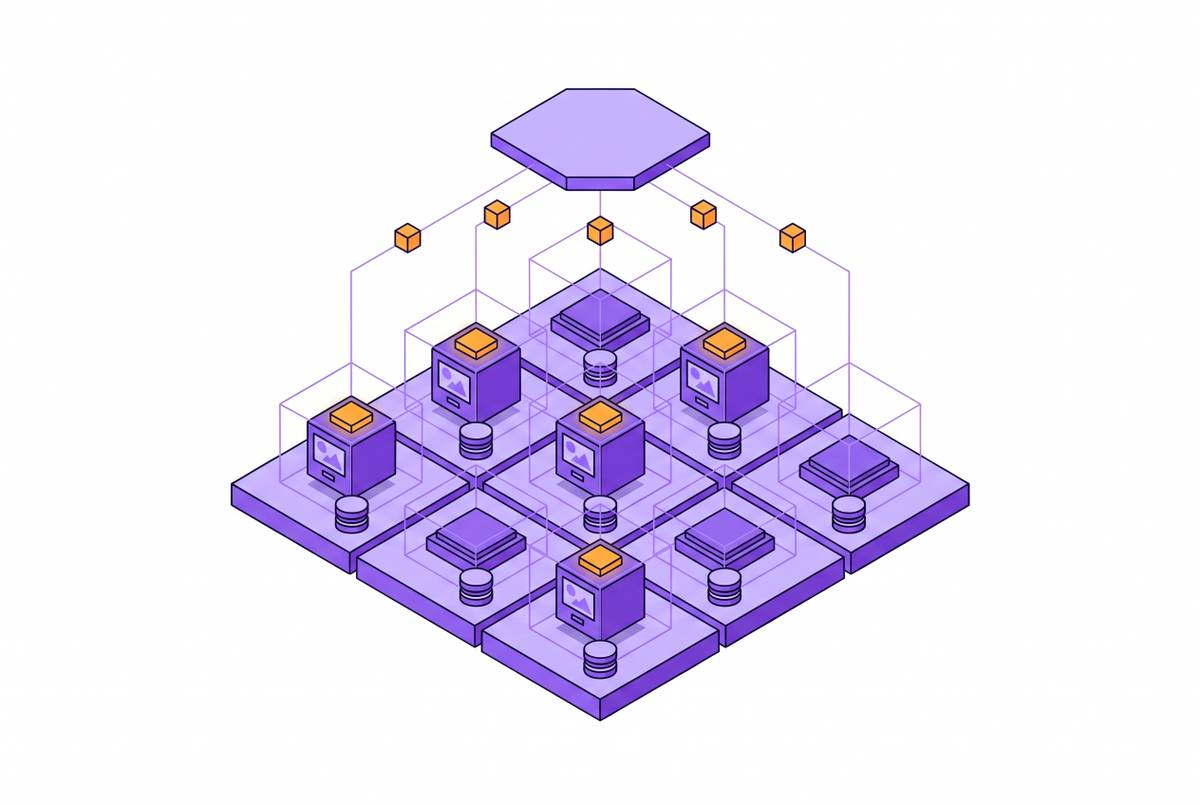
When a product serves many agents at once, it must set up per-user isolation as part of provisioning. Firecracker's one-VMM-per-microVM design maps directly to this model, with each tenant receiving a VM whose identity is injected at runtime. The fleet establishes the boundary before application work begins. Reusing a warm worker across users, or across steps without preserving ownership boundaries, risks contamination through cached credentials, leftover files, or in-memory state from a previous occupant.
Visibility must follow the same tenant boundary. Tenant IDs need to propagate through every distributed trace span, including tool calls, retrievals, retries, and LLM invocations. That association supports debugging, audit trails, and cost accounting without reconstructing ownership afterward. Per-sandbox spend caps then constrain runaway execution. They prevent one customer's misbehaving agent from consuming another customer's budget or expanding the operator's aggregate bill without a limit.
Predictable, lighter workloads can use denser environments, while untrusted or high-autonomy agents require full VM isolation. This distinction does not relax the boundary for computer-use agents handling real credentials and filesystems. Because the heaviest users consume a disproportionate share of compute, operators should model that distribution and establish tenant-level usage bands, including healthy, elevated, and contract-revision territory. Isolation identifies whose environment is running, while tenant-level accounting identifies who is paying for it.
Developer tooling surface: SDK, CLI, MCP, and the primitives that matter
Runtime capabilities become useful only when developers can control them through ordinary tooling. The tooling surface centers on Python, TypeScript, Go, and C# SDKs, a CLI, and the Model Context Protocol for agent-to-tool communication. Through these interfaces, developers need access to sandbox lifecycles, files, Git operations, processes, code execution, and terminal sessions. Hibernate/resume, snapshot/restore, fork, credential injection, and health/status signals must be first-class primitives so that orchestrators can distinguish an idle environment from an active one.
MCP adapters provide a standardized discovery and invocation path. Exposing sandbox capabilities as MCP tools lets an MCP-aware agent framework use them without bespoke API integration for each operation. The SDK and CLI still need to expose the underlying lifecycle behavior clearly. A fork operation, for example, serves speculative execution, while snapshot/restore provides a version boundary for recovery. Treating those operations as explicit primitives makes them available to the agent's execution model rather than leaving them as infrastructure procedures outside it.
Observability completes that control surface by explaining what happened inside the workspace. Session recordings, screenshots, execution traces, and per-step logs let developers find the action that caused a GUI failure. Each artifact must be tied to the run it came from. Associating intermediate results with that run, then restoring a snapshot to the pre-failure state, provides a basis for reproducing errors. Without this connection between execution, evidence, and recovery, a multi-step agent can fail opaquely even when its infrastructure remains healthy.
How persistent VM-isolated agents satisfy the full requirement set
The requirements converge because each depends on control of the same workspace. The VM boundary supplies a separate kernel, while runtime control of disk and memory supports preservation, branching, and recovery. Persistence then needs to keep credentials and browser state while the agent sleeps without letting another tenant see that state. A saved workspace is not trustworthy if a weak ownership boundary allows another workload to alter it before restoration.
Snapshotting must be part of normal scheduling to free idle compute, and restoration must be fast enough for an interactive request, which cannot wait as long as an offline backup recovery. Rollback adds version selection to that same state-management path. It requires a coherent workspace boundary, while isolated forks let alternative trajectories proceed without overwriting one another.
For developers, the consequence is that runtime selection determines which guarantees the product can offer directly. A long-horizon personal agent needs its execution environment to keep its state between steps, while a tool used now and then can leave that state in the external harness. Neither placement removes the need to define isolation, ownership, recovery, and cost controls. A persistent, VM-isolated runtime with snapshot-aware scheduling makes them properties of the environment.