Headless Browser Cost Optimization for Idle Agent Fleets
Snapshot-restore scheduling slashes idle browser costs by freezing processes between tasks.

Headless browser cost optimization for idle agent fleets is primarily a scheduling problem. Warm browser processes hold memory and compute while agents wait. Snapshot-and-restore scheduling closes that gap by preserving the full runtime in storage between tasks, so compute spending follows active work.
Why idle browsers are the actual cost problem in agent fleets
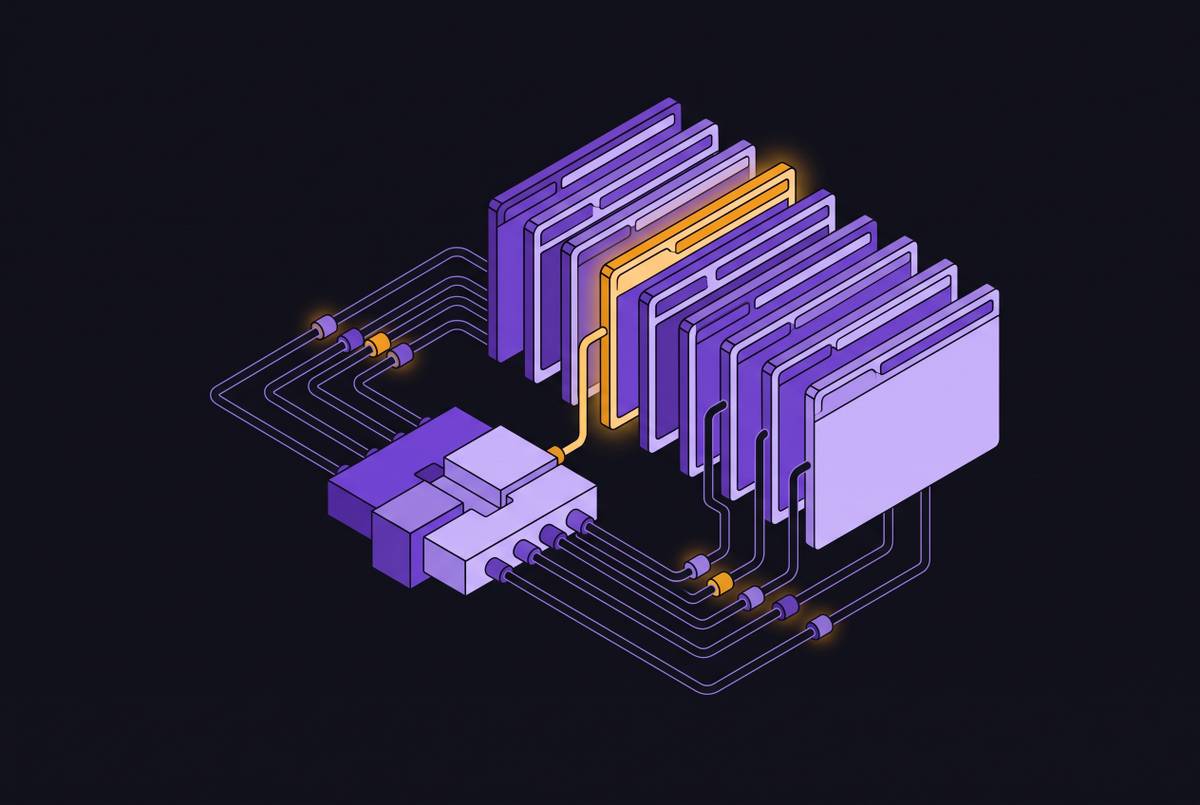
Chromium is a multi-process application by design. Its browser process manages the renderer processes, a GPU process, and utility processes, and each renderer has its own Blink layout engine and V8 JavaScript heap. Site Isolation, which has been on by default for desktop Chrome since 2018, puts sites in separate renderer processes. Consequently, a single tab that touches several embedded domains can require several processes. This design uses resources before the agent starts work on a task.
The overhead is structural. A practical sizing rule for browser fleets is roughly ten concurrent Chromium instances per gigabyte of memory, before allowing sufficient room for the operating system and orchestration layer. Keeping those instances alive reserves resources even when no page is changing and no task is advancing. For an agent, the browser’s readiness becomes a standing compute commitment.
At fleet scale, that commitment compounds across both agents and time. One agent checking several sources hourly produces thousands of sessions per month, while agents holding browsers open for modest portions of working days accumulate hundreds of browser-hours monthly. Those hours bill whether or not useful work occurs. Because the charge appears under generic compute spending, the cost of waiting can remain obscured until the fleet grows. Active browsing is visible in task execution, but idle occupancy can dominate the bill.
What the browser stack costs across its four separable layers
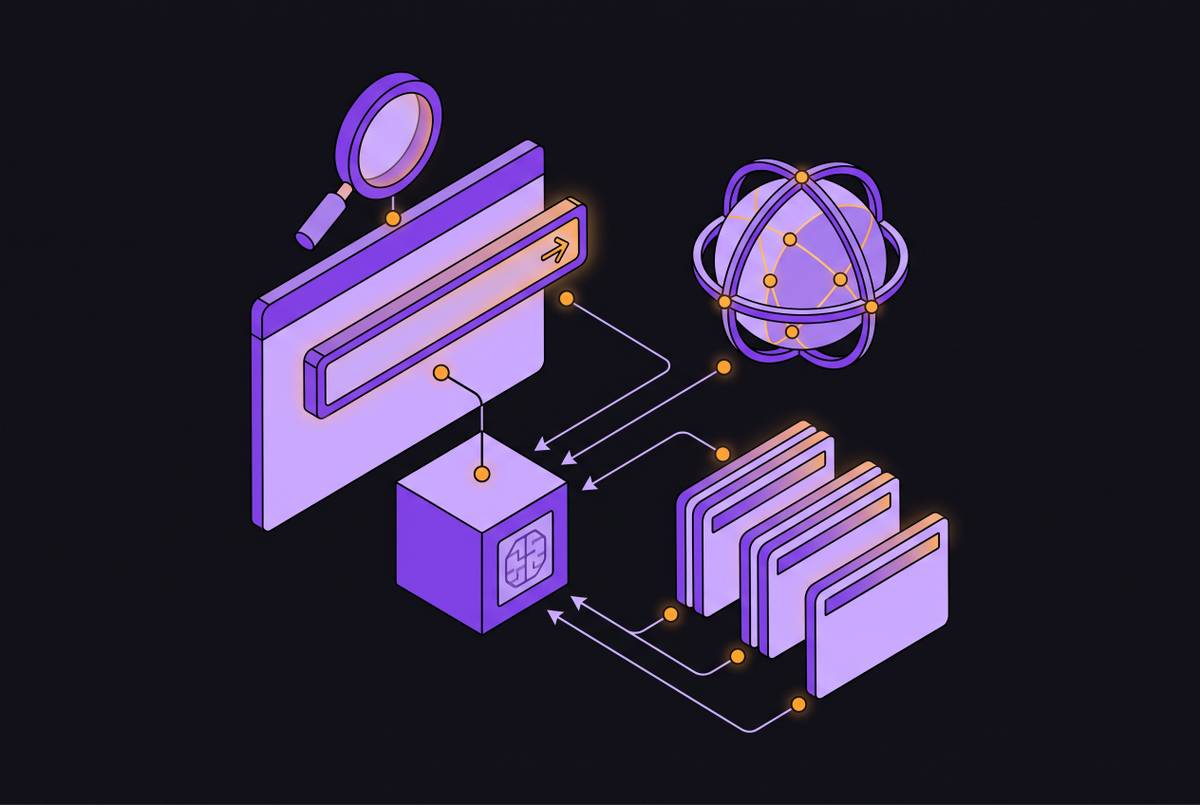
A browser-capable agent combines four distinct layers. Layer 1 is the rendering engine, which renders pages and executes JavaScript. Chrome or Chromium is the default, while Lightpanda is an alternative written in Zig and independent of Chromium or Blink. This layer determines how heavy each browser process is. Process allocation between jobs depends on more than the rendering engine alone.
Layer 2 is the driver that controls the browser, with choices including Playwright, Puppeteer, and agent-browser. Layer 3 is the hosting platform, which determines who pays for the running process and how its execution is scheduled. Layer 4 is the agent framework, which decides what to click. Browser Use, Stagehand, and Skyvern occupy this last layer, but a framework is optional and can be omitted when the task does not need it. These are separate decisions.
Idle cost therefore sits chiefly at Layer 3, although Layer 1 shapes its size. The difficulty is that avoiding idle allocation can introduce a cold-start penalty. Starting a fresh browser on every request repeats launch work, while a warm pool amortizes that work by retaining running browsers. The pool cuts startup latency, but the waiting time is paid for. Snapshot-restore changes that trade-off through the infrastructure beneath the browser stack, with no need for another driver or agent framework.
Why lightweight browser alternatives reduce per-page cost but do not solve idle economics
Lighter engines reduce the resources required for browsing. Kitesurf speaks CDP and MCP, supporting a drop-in swap rather than a full rewrite, and returns DOM state and page data in a format built for LLM consumption. Lightpanda takes the engine-replacement route. Its repository reports roughly 9× faster execution and about 16× less memory than Chrome headless as of August 3, 2026. Its growing Web API coverage and AGPL-3.0 license remain compatibility and commercial considerations.
A regional distributor’s portal-checking automation illustrates the value of matching the browser to the job. The automation was rebuilt to reserve the heavy browser for sites with genuine JavaScript-driven login requirements, while using lightweight fetching elsewhere. Runtime fell sharply, hangs disappeared, and monthly compute cost fell substantially. The improvement came from narrower resource use. The automation stopped applying the heaviest execution path to every task.
That is a real improvement, but a different optimization. Even a small idle footprint becomes significant when multiplied across thousands of per-user agents that wait for most of the day. A lighter engine lowers the resources each instance needs, but the instance still runs. Request interception has a similar limit, although blocking CSS, images, fonts, and media can cut renderer-process memory by 60 to 70 percent on a typical content-heavy page. Both approaches reduce allocated resources, while snapshot-restore removes idle compute allocation altogether.
How snapshot-restore at the microVM layer changes the idle cost equation
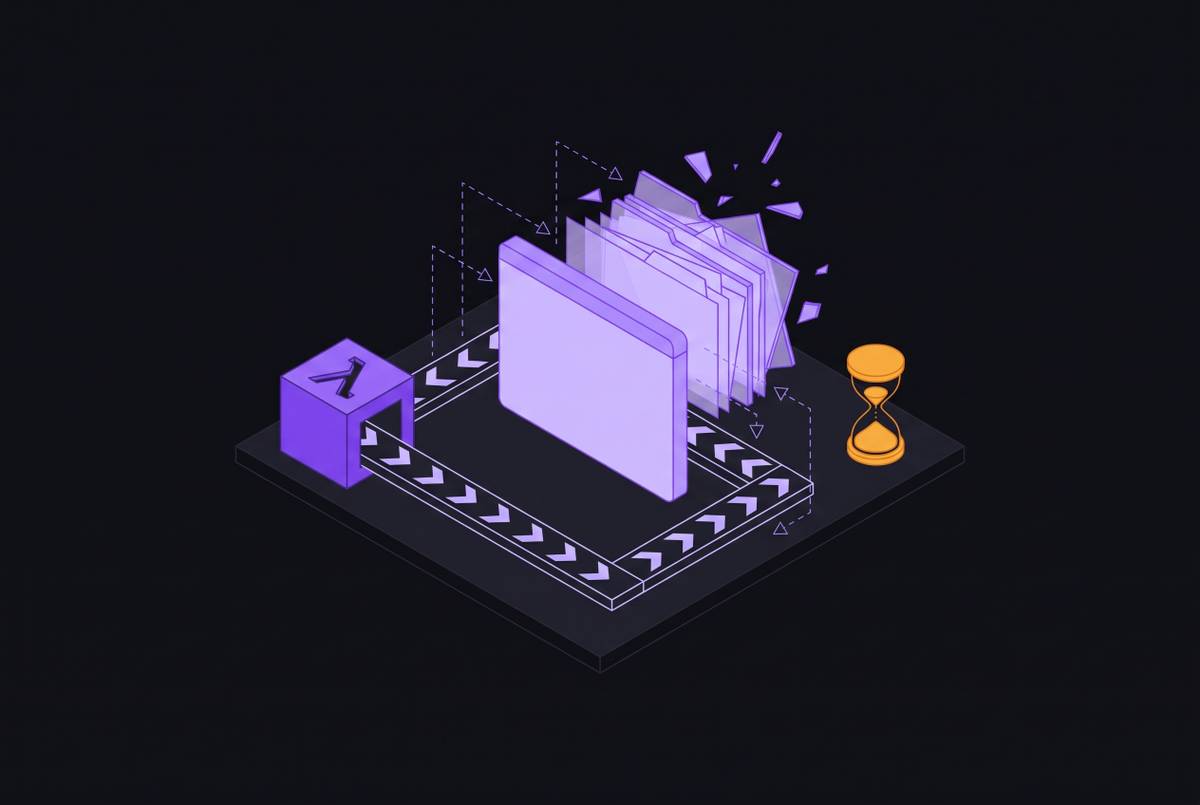
Snapshot-restore freezes the browser and its full runtime into a file, releases their memory, and restores them when work arrives. Firecracker restores a snapshot without booting a kernel, running init, or restarting the agent. It memory-maps the snapshot file, loads the CPU state, and resumes execution from the saved point. From the guest’s perspective, time has skipped forward.
The restore cost follows the working set. The guest needs time and RAM for the memory pages it touches to become ready for the next task. A large guest that resumes by touching only a small fraction of its memory therefore pays the immediate paging cost for that fraction. Between tasks, there is no idle VM consuming compute. The remaining charge is snapshot storage, which is orders of magnitude cheaper than compute.
Restore allocates a pre-built network slot, clones the root filesystem copy-on-write, and resumes the memory snapshot with the runtime already warm. There is no browser pool to pre-fill or exhaust under load. ForgeVM is an open-source implementation distributed as a single Go binary, and its developer reports 28 ms restore times.
The infrastructure pattern also extends beyond that implementation. PandaStack is an Apache-2.0 Firecracker platform, while Amazon Bedrock AgentCore launches lightweight microVMs on a per-session basis without spinning up a full virtual machine per tenant. AgentCore gives each session an isolated filesystem for intermediate artifacts and multi-step interactions. Persistent filesystem storage is available in Preview and must be explicitly configured. Its per-session model supports the broader case for microVM scheduling, without establishing that every platform has the same persistence or billing behavior.
Where idle cost bites hardest: human-in-the-loop and per-user agent patterns
In human-in-the-loop workflows, an agent may pause mid-task for seconds or hours while waiting for a person to respond, but its browser session and intermediate computation still need to survive. Keeping the VM alive preserves continuity at the cost of compute throughout the wait. Tearing it down instead loses the live session state, so it has to start again. Neither choice fits a workflow whose pause duration is outside the agent’s control.
Snapshot-restore separates continuity from continuous execution in this case. The browser session, cookies, open tabs, and intermediate computation are frozen together and restored when the human responds. The pause becomes a storage interval. This distinction is especially valuable because the wait is unpredictable.
Per-user fleets arrive at the same problem differently. Their defining issue is population rather than a particular interruption, because most agents are idle at any moment, waiting on a user, a tool call, or another process. Charging for every provisioned runtime makes the bill follow total agent count. Snapshot-restore lets thousands of agents keep their state without all using compute at the same time. The economic advantage comes from scheduling only the active portion of the fleet.
What persistent VM isolation adds beyond cost savings
The VM boundary also changes what the agent can do. A Firecracker microVM gives the agent its own kernel, so it can install system packages and browser extensions and run arbitrary processes within its environment. The agent can break and rebuild that environment without affecting another tenant’s runtime. This is broader autonomy than browser control alone. The same boundary used to preserve execution state also separates one agent’s operating environment from another.
Persistent disk extends that continuity beyond live memory. Credentials, cookies, cached authentication tokens, downloaded files, and intermediate artifacts can survive sleep and redeployment. The microVM boundary also isolates a compromised or misbehaving agent from adjacent agents and the host.
Managed browser services remain legitimate choices for narrower requirements. Browserbase, Steel.dev, and Cloudflare Browser Run provide session isolation at the browser-context or container level, while the platform controls the available environment and persistence interfaces. Kernel takes a unikernel-based approach with per-second billing and a standby mode that parks idle browsers without destroying state. That cuts idle cost, but gives the agent less control than an agent-owned VM. The distinction is not whether managed browsing is useful, but whether the agent needs control beyond the service’s exposed capabilities.
Applying snapshot-restore scheduling to a browser-capable agent in practice
The practical implementation starts with the execution boundary. A team adopting this model should make the VM, rather than the browser process, the unit of snapshot and restore. Chromium starts when the VM first boots, together with its driver and the rest of the agent runtime. Subsequent restores return those processes in their running state. The scheduler handles freezing and resumption, so browser code does not need to implement its own idle-cost mechanism.
Within that boundary, teams should also use request interception where the task allows it. Blocking images, CSS, fonts, and media reduces active browsing overhead and can shrink the working set that restore must page in. Driver choice remains independent of this optimization. Playwright, Puppeteer, and agent-browser can all run inside a Firecracker VM because the snapshot captures their full process state.
Protocol state is another boundary to keep explicit. The July 28, 2026 MCP specification revision removed protocol-level per-client sessions and the initialization handshake, making the protocol stateless at its core. That aligns with an architecture in which durable agent state lives in the VM snapshot. The browser driver controls browsing, while the VM scheduler controls the lifetime of its execution environment.
What to look for in infrastructure built around this scheduling model
Each agent should have its own VM and kernel rather than a shared container, so the execution boundary supports both autonomy and separation. Sub-second restore is a hard requirement for responsive agent products. Slow restoration discourages aggressive freezing and recreates the pressure to retain warm capacity.
The billing model must follow the same boundary. A platform should charge for storage between tasks rather than idle compute or a warm pool maintained on the customer’s behalf. Otherwise, the runtime may sleep while the economic commitment remains. Persistent disk matters just as much because credentials, browser state, and intermediate artifacts must survive sleep and redeployment. Wiping that state on wake forces repeated authentication and reconstruction, undermining the continuity the architecture is meant to preserve.
A developer should be able to move from code to a live API endpoint without managing orchestration infrastructure. The platform should own the freeze-and-restore lifecycle. Browser-management features can improve active execution, but they cannot compensate for an execution model that charges for waiting.