Why Browser Agent State Collapses at Every Serverless Boundary
Browser agents need persistent workers to safely recover sessions and verify actions after timeouts.
Persistent AI agent infrastructure fits long-running browser tasks better than stateless serverless functions because it preserves the worker, browser session, and recovery state across task steps. A hard execution boundary can break all three together, leaving a restarted agent unable to trust its session or establish its last action’s outcome. Reliable browser agents need a persistent, isolated workspace with action checkpointing.
Why browser agents are uniquely exposed to execution boundaries
A browser agent controls more than a request and its response. It operates a running browser whose cookies, local storage, open tabs, downloads, and unfinished interactions have different lifetimes. Chromium is itself a multi-process system, with browser, renderer, GPU, and network processes participating even in a single-tab workflow. Those parts do not necessarily fail together. When those parts survive, they can leave state that a new automation worker cannot safely make sense of.
Browserbase documents that a single Playwright/Chromium instance can peak around 700MB–1GB, a footprint that compounds as parallelism grows. But resource use is only part of the distinction from API-only agents. A browser worker also holds the connection between the current session and the action being performed on a page. Losing that connection can leave a new browser operating with old authority while earlier side effects remain unverified. Recovery therefore needs to account for three separate things: worker liveness, session validity, and action continuity.
What a serverless boundary actually fires when it hits a browser agent
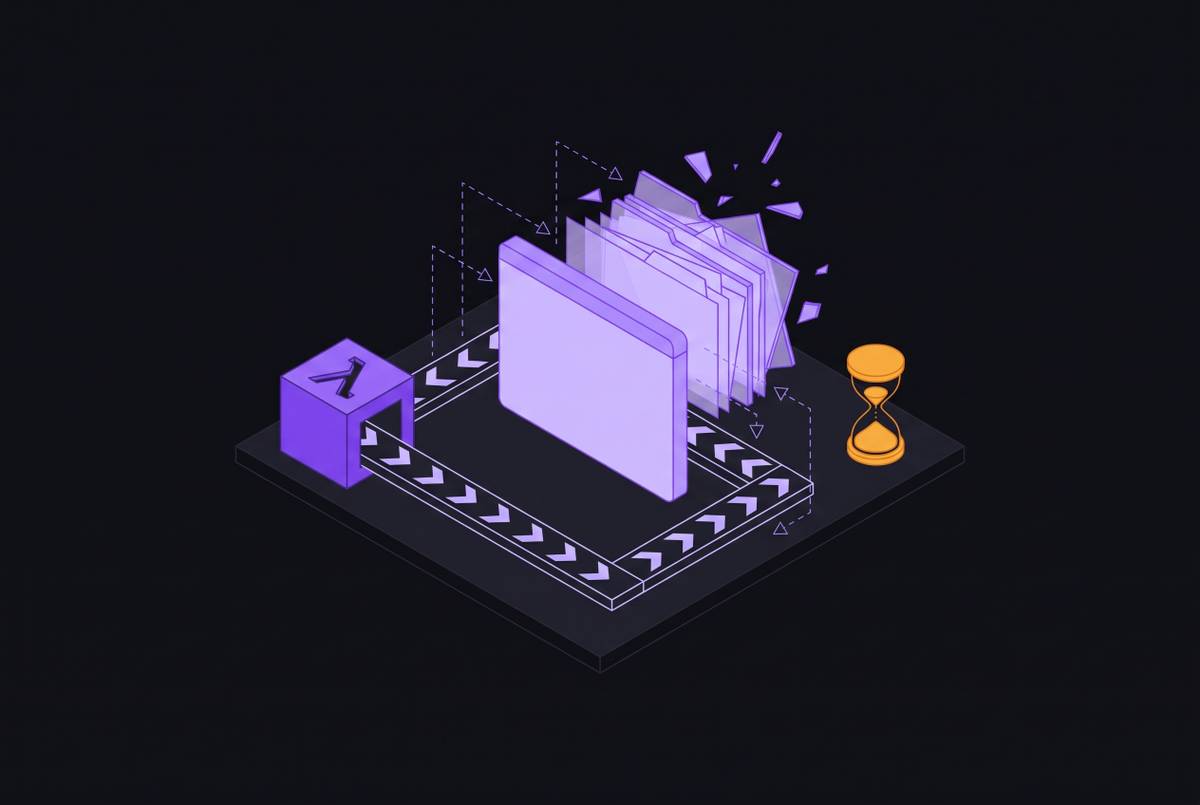
A hard serverless execution limit terminates work without preserving a recoverable stopping point. Multi-step reasoning, external tool calls, and long-running streaming sessions can make an agent task take longer than an invocation is allowed to run. The task may still be making progress. When termination arrives, however, the worker cannot rely on a cleanup interval to ask the browser to serialize state, flush pending writes, or confirm the last action’s result.
The precise duration changes only when this happens. Stateless functions suit event-driven work because execution can end without preserving the local workspace for the next invocation. A browser task instead needs a workspace whose state holds together from one step to the next, even when a step needs a remote page to finish. Any continuity beyond the invocation must be provided elsewhere. That is the architectural conflict behind apparently intermittent timeouts.
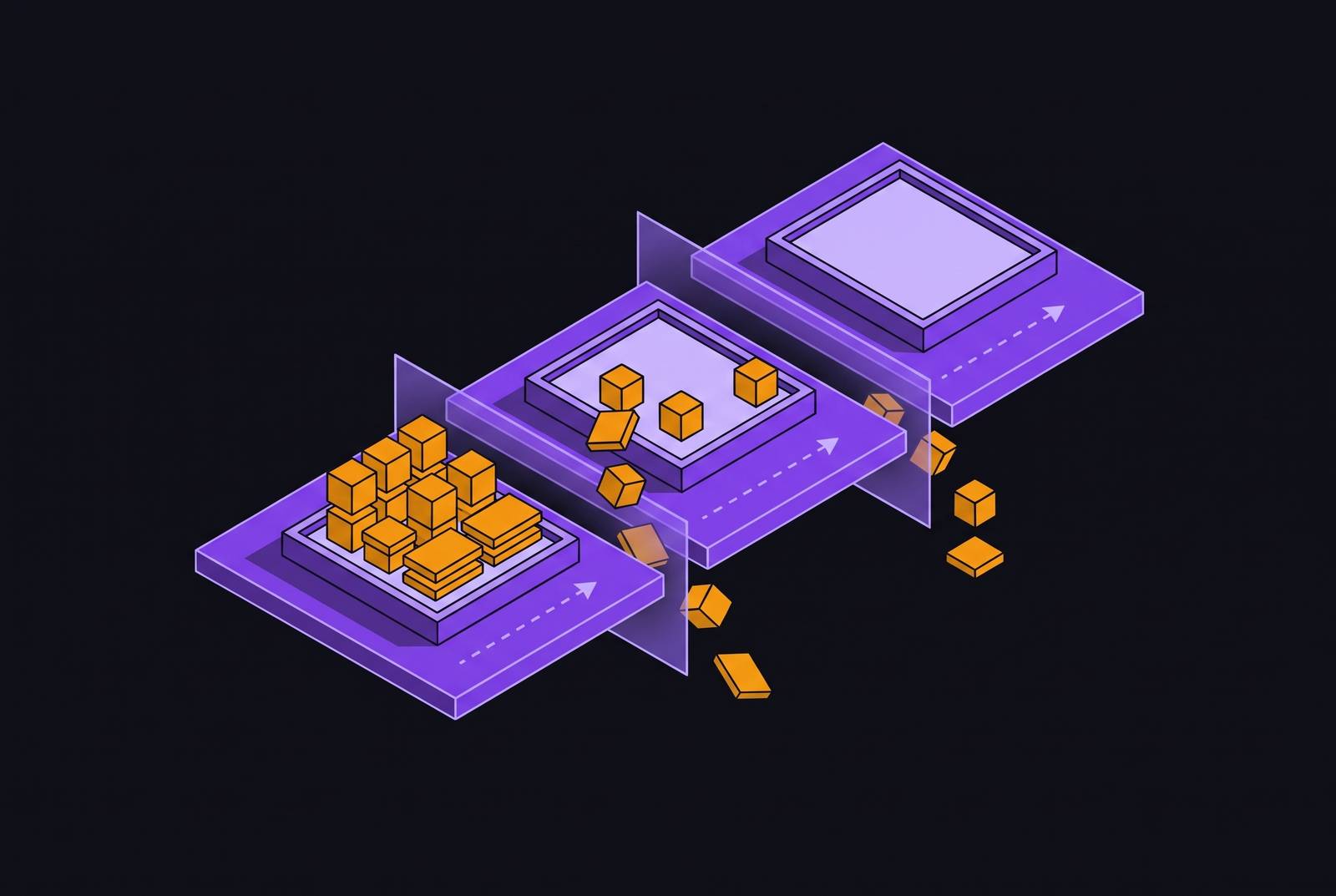
The failure therefore reaches beyond execution alone. When the boundary fires, it collapses three things at once.
The first collapse: worker liveness and what dies with the process
Worker liveness answers whether the agent process is running. At hard termination, the answer changes immediately. In-memory conversation context, queued tool calls, the reference to the browser instance, and any unsaved execution state disappear with the worker. These losses are visible enough to make restarting the process seem like the natural recovery operation. Yet that restart repairs only the ability to execute new work.
A new worker does not know what happened to an interrupted action just because it starts up. It may reconnect to a surviving browser session without knowing what that session was doing when control disappeared. Chromium’s subprocesses can also outlive the automation process, retaining resources and state that the replacement has no handle to. Worker health therefore needs its own status, separate from the health of the browser session. A running process can still be controlling an invalid session or an unresolved action.
The second collapse: session validity and why the browser profile outlives the process
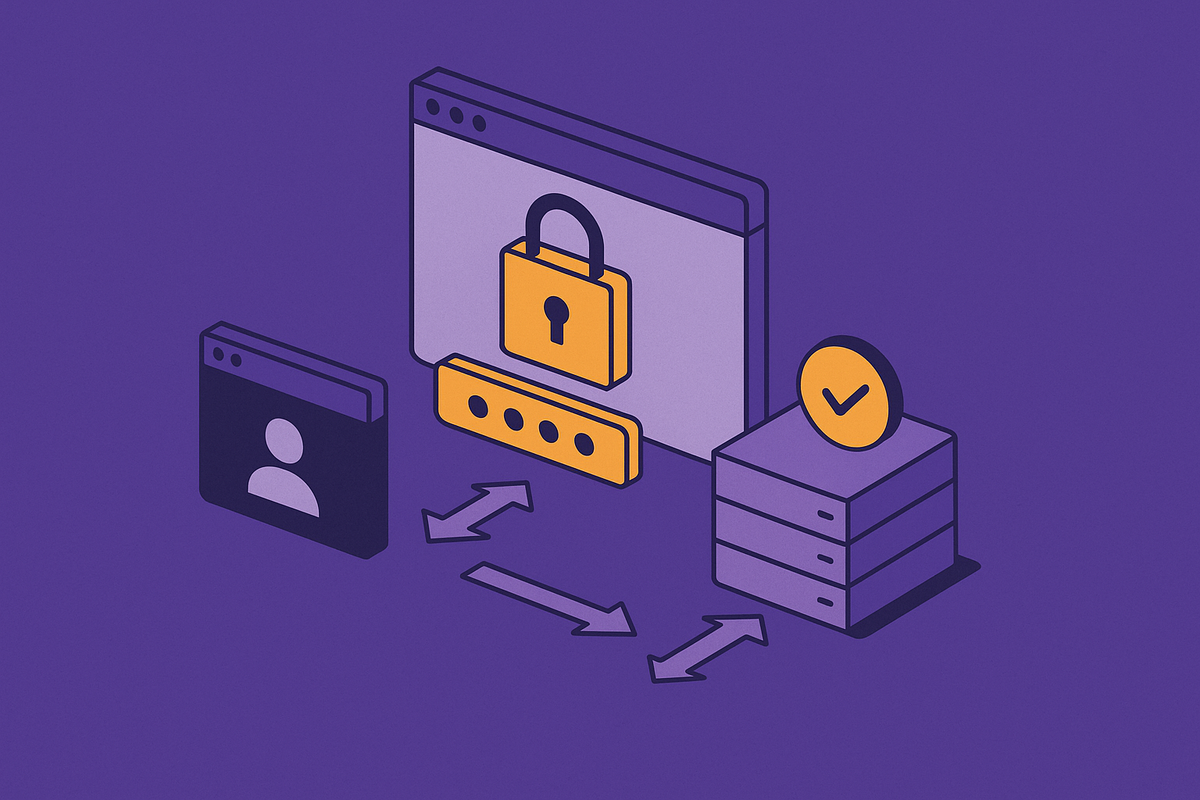
Session validity tells whether the browser profile is still authorized and can be used. Cookies, local storage, service worker state, and cached credentials are held in the browser profile. They can survive the worker’s death. Their survival does not establish integrity, however, because authentication may have been interrupted while cookies were rotating or login state was changing. The new worker inherits that uncertainty with the profile.
Retained authority also creates a security exposure. Zenity Labs documented a PerplexedBrowser exploit path that abused an unlocked 1Password extension to access and exfiltrate vault credentials. That finding shows why authority left inside an agentic browser must be treated as security-sensitive state. A new worker’s ability to connect is not proof that the inherited authority is appropriate.
Going through the authentication steps again takes time and may need a person to help. Even successful re-authentication leaves another question unanswered, because authorization says nothing about whether the interrupted action completed.
The third collapse: action continuity and the problem of unverifiable side effects
Action continuity asks whether the intended side effect occurred. A submission, file upload, or purchase confirmation can be unsafe to repeat, but skipping it can leave the task unfinished. The critical interval lies between dispatching the action and observing its result. If termination falls there, the page may have processed the interaction, timed out, or stopped at another confirmation. The worker no longer knows which of these happened.
Reconnecting exposes the current page. Without the lost context, a “thank you” page or a “session expired” page may not settle what happened to the earlier operation. Restarting cannot supply the missing evidence. Neither can re-authentication, because renewed permission to act does not establish the outcome of an earlier action.
Recovery needs recorded outcomes, idempotency logic, action journaling, or explicit rollback where those mechanisms apply. Infrastructure can preserve a known-good recovery point, but it cannot infer an unobserved remote side effect from local state alone. The three collapses are coupled because the same event kills the worker, breaks confidence in session integrity, and removes certainty about the action in flight.
Why serverless functions cannot hold the three state layers together
The shared trigger is only half the problem. The terminated worker was also the component connecting the browser session to the intended action. With a stateless execution model, nothing is kept by default that knows enough to bring all three layers back together during recovery. Restoring execution, verifying authorization, and resolving a side effect require different evidence. A successful retry at one layer can therefore conceal failure at another.
External storage preserves selected state, but moves coordination into application code and network operations. Serializing session state to DynamoDB, Redis, or object storage on every step adds repeated serialization and deserialization work. That finding concerns those workloads and illustrates how state handling can dominate an agent loop.
Storage also cannot close an observation gap by itself. A record that an action was dispatched does not establish that the remote page completed it. The structural mismatch is therefore not a framework choice or a timeout setting. Stateless invocation boundaries discard the local continuity that browser agents need across execution, authorization, and action evidence simultaneously.
What holding all three layers together actually requires from infrastructure
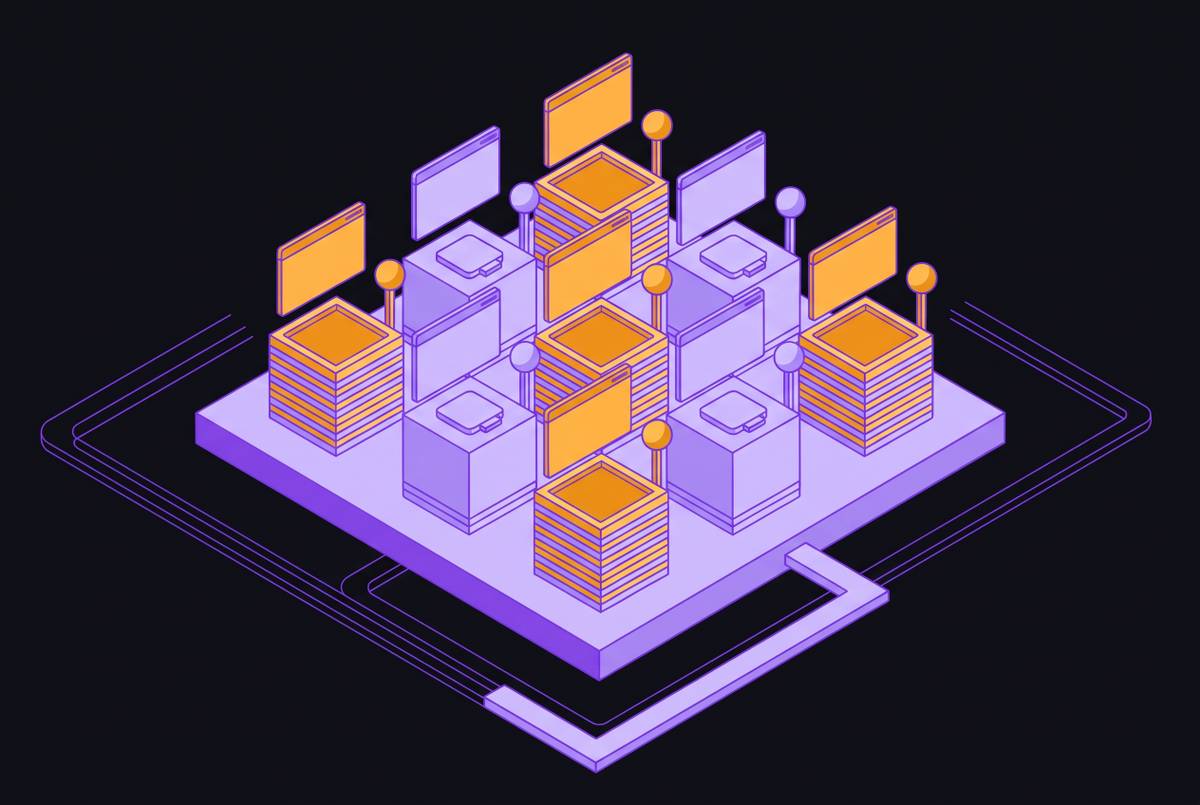
The execution environment must persist for the task’s lifetime, rather than treating each invocation as the task’s complete runtime. Worker persistence gives the agent a place to keep running and hold on to its context. Browser co-location keeps the controlled browser and its agent together in that persistent environment. Session state then need not cross a network boundary on every step. The environment becomes the unit of recovery rather than a collection of independently reconstructed fragments.
Persistence alone is not enough to establish action continuity. The environment also needs checkpointing that preserves observed outcomes before recovery depends on them. A checkpoint must distinguish a known-good position from an operation whose result remains unresolved. That distinction prevents a resumed process from mistaking restored memory for proof of remote completion.
Isolation completes the requirement. Each agent’s browser session needs separation from other sessions so that cookies, storage, and credentials cannot cross-contaminate work. This protects correctness as well as security. Without these properties, teams must keep a second system of browser builds, cleanup routines, and recovery logic working just so the agent runtime can be used.
How micro-VM isolation maps onto the three-layer requirement
A micro-VM per agent task places the worker and browser inside one recoverable execution environment. On bare metal, that runtime is not governed by a function’s per-invocation timer, so the process can run until the task completes, sleeps, or is explicitly terminated. Firecracker uses hardware virtualization to give each micro-VM its own kernel. The browser’s subprocesses remain inside that VM’s process namespace. This provides a concrete isolation boundary for the browser and its controller.
Session state is held on the VM’s disk and in its memory, so the profile need not be exported again between invocations. Snapshot-restore preserves that local state when the agent sleeps, including cookies, storage, and tabs. A persistent VM can also checkpoint after an observed action outcome, retaining the execution context needed to resume from that position. The checkpoint does not reverse or prove an unobserved remote action. Its value is preserving evidence and context that a terminated function would otherwise lose.
Copy-on-write forking lets this model try other execution paths in branches and discard the branches that fail. Those branches isolate only local execution state.
Why the economics of persistent VM isolation work at agent scale
The traditional objection to persistent VMs assumes that persistence means keeping machines running. A warm pool bills for compute even when no agent is active, making idle time expensive across a large fleet. But browser agents spend much of their time idle between task steps. Snapshot-restore separates retained state from active compute. An agent can keep its workspace without keeping its processor allocation running throughout that interval.
With restoration in under a second, idle environments can be stored and recreated when work resumes. Compute billing stops while the agent sleeps, although storage remains a cost. This differs from both a continuously running VM and a stateless function that repeatedly exports browser state. Serverless cost comparisons are incomplete when they treat that recurring serialization work as negligible.
The per-user model follows from this distinction. For thousands of agents idle between sessions, the idle footprint resembles a fleet of storage volumes. Active work still consumes compute. The same snapshot-restore mechanism that preserves the workspace also changes its idle cost, so the architecture and economics reinforce each other.
What developers building browser agents should change about their architecture
Diagnose the failed layer before choosing a remedy. A dead worker, an unauthorized session, and an unknown action outcome are different failures even when they appear in the same incident. Increasing a timeout may postpone worker termination, but it does not verify inherited credentials. Re-authentication restores authority while leaving action certainty unresolved. Idempotency checks address repetition risks without preserving the worker’s execution context.
For tasks that depend on all three layers, developers should place the browser and agent in the same persistent, isolated environment. Infrastructure should handle checkpointing and state recovery so that application logic does not need custom serialization scattered through it. Action journaling and rollback must still respect what the environment can observe about remote effects. Session isolation should be the default because shared credentials and storage produce correctness failures as well as security risks.
Wake latency also belongs in the continuity budget. Sub-second restoration cuts the time lost to an interruption, but a restored browser profile still needs valid remote authorization. For per-user deployments, snapshot-restore scheduling makes it possible to retain one isolated environment per user while storing idle agents.